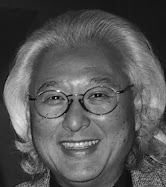
This is a great article by Ryan Kelly, Westmont Hospitality
A recommended read.
Thank you Ryan.
An Awakening Message - The Poem by Duo-Liang Lin, Ph.D
A Poem
'An Awakening Message'
Published by the Washington Post
When we were the Sick Man of Asia , We were called The Yellow Peril.
When we are billed to be the next Superpower, we are called The Threat.
When we closed our doors, you smuggled opium to open markets.
When we embrace Free Trade, You blame us for taking away your jobs.
When we were falling apart, You marched in your troops and wanted your
fair share.
When we tried to put the broken pieces back together again, Free Tibet
you screamed, It Was an Invasion!
When we tried Communism, you hated us for being Communist.
When we embrace Capitalism, you hate us for being Capitalist.
When we have a billion people, you said we were destroying the planet.
When we tried limiting our numbers, you said we abused human rights.
When we were poor, you thought we were dogs.
When we loan you cash, you blame us for your national debts.
When we build our industries, you call us Polluters.
When we sell you goods, you blame us for global warming.
When we buy oil, you call it exploitation and genocide.
But when you go to war for oil, you call it liberation.
When we were lost in chaos and rampage, you demanded rules of law.
When we uphold law and order against violence, you call it violating
human rights.
When we were silent, you said you wanted us to have free speech.
When we are silent no more, you say we are brainwashed-xenophobics.
Why do you hate us so much, we asked.
No, you answered, we don't hate you.
We don't hate you either,
But, do you understand us?
Of course we do, you said,
We have AFP, CNN and BBC's...
What do you really want from us?
Think hard first, then answer...
Because you only get so many chances.
Enough is Enough, Enough Hypocrisy for This One World.
We want One World, One Dream, and Peace on Earth.
This Big Blue Earth is Big Enough for all of Us.
************************************
Duo-Liang Lin, Ph. D.
Professor Emeritus of Physics
University at Buffalo
State University of New York
Buffalo, New York 14260-1500
Email: DLLIN@buffalo.ed
'An Awakening Message'
Published by the Washington Post
When we were the Sick Man of Asia , We were called The Yellow Peril.
When we are billed to be the next Superpower, we are called The Threat.
When we closed our doors, you smuggled opium to open markets.
When we embrace Free Trade, You blame us for taking away your jobs.
When we were falling apart, You marched in your troops and wanted your
fair share.
When we tried to put the broken pieces back together again, Free Tibet
you screamed, It Was an Invasion!
When we tried Communism, you hated us for being Communist.
When we embrace Capitalism, you hate us for being Capitalist.
When we have a billion people, you said we were destroying the planet.
When we tried limiting our numbers, you said we abused human rights.
When we were poor, you thought we were dogs.
When we loan you cash, you blame us for your national debts.
When we build our industries, you call us Polluters.
When we sell you goods, you blame us for global warming.
When we buy oil, you call it exploitation and genocide.
But when you go to war for oil, you call it liberation.
When we were lost in chaos and rampage, you demanded rules of law.
When we uphold law and order against violence, you call it violating
human rights.
When we were silent, you said you wanted us to have free speech.
When we are silent no more, you say we are brainwashed-xenophobics.
Why do you hate us so much, we asked.
No, you answered, we don't hate you.
We don't hate you either,
But, do you understand us?
Of course we do, you said,
We have AFP, CNN and BBC's...
What do you really want from us?
Think hard first, then answer...
Because you only get so many chances.
Enough is Enough, Enough Hypocrisy for This One World.
We want One World, One Dream, and Peace on Earth.
This Big Blue Earth is Big Enough for all of Us.
************************************
Duo-Liang Lin, Ph. D.
Professor Emeritus of Physics
University at Buffalo
State University of New York
Buffalo, New York 14260-1500
Email: DLLIN@buffalo.ed

Fears of China overheating are back
NEW YORK (CNNMoney.com) -- Forget the worries about China's economy cooling off. Overheating might be the greater concern.
China reported Thursday that its exports grew nearly 50%. Property prices in the biggest cities shot up 12% compared to a year earlier, the second biggest jump on record. Industrial production is up nearly 19% so far this year.
Read more.....
China reported Thursday that its exports grew nearly 50%. Property prices in the biggest cities shot up 12% compared to a year earlier, the second biggest jump on record. Industrial production is up nearly 19% so far this year.
Read more.....
China export surge stirs U.S. anger
China export surge stirs U.S. anger
By Alan Beattie and Geoff Dyer, FT.com
June 10, 2010 8:47 p.m. EDT
U.S. Treasury Secretary Tim Geithner taking heat Thursday from U.S. Senators on China's currency.
(FT) -- A surge in Chinese exports and rising anger in the US Congress will put renewed pressure on China to allow its currency to rise against the US dollar.
Chinese trade figures showed exports leaping by 48.5 per cent in May over the year before, way ahead of analysts' forecasts. Data released in the US showed America's trade deficit widening slightly in April, with some economists arguing that the improvement in net trade and its contribution to US growth appeared to have stalled.
The data gave more ammunition to China's critics in the US Congress, who have said they will proceed with legislation to restrict Chinese imports to correct the perceived misalignment of the country's currency. The US Treasury has been pursuing quiet diplomacy with Beijing to allow the renminbi to rise, but lawmakers said they were losing patience.
Charles Schumer, New York senator and the third most senior Democrat in the Senate, said he would seek to have his bill made into law within two weeks unless he saw signs of action from Beijing. "We need to take stronger action than this back-and-forth," he told Tim Geithner, Treasury secretary, who was testifying to the Senate finance committee.
Mr Geithner said it was important for China to understand that the legislative move in the US had very broad support. "I think the strength of the sentiment in Congress is overwhelmingly strong, it's bipartisan and it reflects how important this is to the United States," he said.
However, Mr Geithner argued that China's trade surplus had fallen by around half as a share of its gross domestic product over the past two years, and said that US exports to China had been rising sharply. "As we emerge from the global financial crisis, US exports to China have rebounded much more rapidly than overall US exports, and are now running 20 per cent above their pre-crisis levels," he said.
Earlier in the year, many investors expected that the renminbi might be allowed to resume its upward movement against the dollar as early as mid-June. But that predicted date has been pushed back as the Greek crisis and fall in the euro have left Beijing unwilling to see an appreciation against the currencies of both its major export markets.
The strong increase in Chinese exports announced on Thursday meant that China recorded a trade surplus in May of $19.5bn, significantly larger than the $1.7bn surplus reported in April and March's modest trade deficit. With house prices still rising in China, the trade data will also renew discussion about whether the economy is overheating.
Coming after Taiwan also announced strong export figures for May, Ben Simpfendorfer, an economist at RBS in Hong Kong, said the case for an appreciation in the Chinese currency was becoming stronger again. The numbers "suggest that global imbalances are worsening again, after earlier improvement," he said. "The trade data argues for an early move on the currency."
The US data showed a trade deficit of $40bn, similar to the two previous months. Steven Ricchiuto, chief economist at Mizuho Securities, said: "The trade deficit data also shows that the improvement in trade flows has stalled."
Some analysts believe China's May export numbers could give Beijing the domestic political cover it needs to begin changing currency policy.
Qu Hongbin at HSBC in Hong Kong said that the export figures are "likely to spur more talk about a renminbi appreciation". But he added: "We do not think this
© The Financial Times Limited 2010
By Alan Beattie and Geoff Dyer, FT.com
June 10, 2010 8:47 p.m. EDT
U.S. Treasury Secretary Tim Geithner taking heat Thursday from U.S. Senators on China's currency.
(FT) -- A surge in Chinese exports and rising anger in the US Congress will put renewed pressure on China to allow its currency to rise against the US dollar.
Chinese trade figures showed exports leaping by 48.5 per cent in May over the year before, way ahead of analysts' forecasts. Data released in the US showed America's trade deficit widening slightly in April, with some economists arguing that the improvement in net trade and its contribution to US growth appeared to have stalled.
The data gave more ammunition to China's critics in the US Congress, who have said they will proceed with legislation to restrict Chinese imports to correct the perceived misalignment of the country's currency. The US Treasury has been pursuing quiet diplomacy with Beijing to allow the renminbi to rise, but lawmakers said they were losing patience.
Charles Schumer, New York senator and the third most senior Democrat in the Senate, said he would seek to have his bill made into law within two weeks unless he saw signs of action from Beijing. "We need to take stronger action than this back-and-forth," he told Tim Geithner, Treasury secretary, who was testifying to the Senate finance committee.
Mr Geithner said it was important for China to understand that the legislative move in the US had very broad support. "I think the strength of the sentiment in Congress is overwhelmingly strong, it's bipartisan and it reflects how important this is to the United States," he said.
However, Mr Geithner argued that China's trade surplus had fallen by around half as a share of its gross domestic product over the past two years, and said that US exports to China had been rising sharply. "As we emerge from the global financial crisis, US exports to China have rebounded much more rapidly than overall US exports, and are now running 20 per cent above their pre-crisis levels," he said.
Earlier in the year, many investors expected that the renminbi might be allowed to resume its upward movement against the dollar as early as mid-June. But that predicted date has been pushed back as the Greek crisis and fall in the euro have left Beijing unwilling to see an appreciation against the currencies of both its major export markets.
The strong increase in Chinese exports announced on Thursday meant that China recorded a trade surplus in May of $19.5bn, significantly larger than the $1.7bn surplus reported in April and March's modest trade deficit. With house prices still rising in China, the trade data will also renew discussion about whether the economy is overheating.
Coming after Taiwan also announced strong export figures for May, Ben Simpfendorfer, an economist at RBS in Hong Kong, said the case for an appreciation in the Chinese currency was becoming stronger again. The numbers "suggest that global imbalances are worsening again, after earlier improvement," he said. "The trade data argues for an early move on the currency."
The US data showed a trade deficit of $40bn, similar to the two previous months. Steven Ricchiuto, chief economist at Mizuho Securities, said: "The trade deficit data also shows that the improvement in trade flows has stalled."
Some analysts believe China's May export numbers could give Beijing the domestic political cover it needs to begin changing currency policy.
Qu Hongbin at HSBC in Hong Kong said that the export figures are "likely to spur more talk about a renminbi appreciation". But he added: "We do not think this
© The Financial Times Limited 2010
Paragon Gaming, Owned by Diana Bennett, the Daughter of Las Vegas Pioneer William Bennett, Wins Rights to Build $450 million hotel-casino Complex in Vancouver, British Columbia
By Howard Stutz, Las Vegas Review-JournalMcClatchy-Tribune Regional News
May 16, 2010 --Diana Bennett watched her father create a Las Vegas tourism segment while building a billion-dollar casino business.
The daughter of gaming pioneer William Bennett has quietly taken that same entrepreneurial spirit to Canada with Paragon Gaming.
Paragon, a privately held company based in Las Vegas, built and operates casinos in the provinces of Alberta and British Columbia.
In March, the company won the rights to construct an estimated $450 million hotel-casino complex in Vancouver, British Columbia, which will become Western Canada's largest gaming and entertainment resort.
The development calls for two hotels and a casino attached to BC Palace, the 60,000-seat downtown Vancouver stadium and site of the opening and closing ceremonies for the recent Winter Olympic Games. The development is also within walking distance of the 18,000-seat General Motors Place, the sports arena where the National Hockey League's Vancouver Canucks play.
The project, which is expected to break ground next year and be completed in 2013, is final piece in creating an entertainment destination in downtown Vancouver to help increase tourism. A convention center was also built for the Olympic Games.
"A lot of infrastructure was created in Vancouver because of the Olympics," Bennett said. "You have the stadium and the project is close to a large retail center. It's in a great location."
Canada recently loosened visa policies with China in order to help tourism. Vancouver expects to increase its Chinese visitation by 50 percent next year, which could create a customer market for Paragon's casino.
The new development will be the only legalized gambling venue in downtown Vancouver. Paragon operates the midsized Edgewater Casino across from BC Palace, which will close once the project opens.
The casino-only Edgewater has 493 slot machines and 75 gaming tables, including a 15-table poker room. The new casino is expected to house 1,500 slot machines and 150 table games and 620 hotel rooms.
"(The Edgewater) was always viewed as temporary," Bennett said. "There were other bidders (for the Vancouver project) but we had the casino license. Others could build a hotel, but no one could offer the economic impact that we could with our plans."
Bennett learned casino operations and development as an executive with her father's Circus Circus Enterprises in 1980s and 1990s. The Vancouver project is the most ambitious venture in her company's 10-year history.
"We have a very good reputation while we've stayed under the radar," Bennett said. "Business seems to find us."
Bennett's father and a partner bought Circus Circus Las Vegas in the 1970s and began marketing the property toward families, offering reasonably priced amenities and attractions. William Bennett built the Excalibur and Luxor, creating the foundation of what would become the Mandalay Resort Group. For her father, Diana Bennett oversaw the company's casinos in Laughlin.
After operating the Sahara for her family's Gordon Gaming division, Bennett branched out her own along with long-time Circus Circus executive Scott Menke to explore casino management and development opportunities outside Southern Nevada. Larger gaming companies were consolidating smaller operations, which made competition a challenge for independent operators.
Bennett and Menke found a management deal with the Augustine Band of Cahuilla Indians in Southern California to operate a casino for the tribe in Palm Springs area. That contract led to additional leads with Indian tribes in Canada, known as the First Nations. Menke began to investigate those opportunities.
"There had been some regulatory changes in Canada that afforded the First Nations a different split of the business model," Menke said. "They wanted to build larger destination casinos, but first they had to increase their infrastructure."
The company's first development, the River Cree, is on the western edge of Edmonton, Alberta, and includes a 255-room hotel, a 62,200-square-foot casino with 600 slot machines and 40 table games, along with dining and other entertainment attractions, including two hockey rinks.
A second casino, in Whitecourt, Alberta, has 250 slot machines, 11 table games and a full service truck stop.
In Canada, Paragon employs just fewer than 2,000 workers.
Gaming revenues are shared with the provinces and First Nations.
Vancouver presents Paragon with an opportunity for a showcase resort.
British Columbia Premier Gordon Campbell was hopeful Paragon's plans for Vancouver will help recapture some of the excitement brought about by the visitation that came with the Olympics.
"This project will create literally thousands of jobs and be an important generator of tourism and economic activity for Vancouver and the entire province," Campbell said.
Some Vancouver city leaders were unhappy with the plans because the project is considered a "Las Vegas-style" resort and they were worried about the location and area density. However, BC Palace is on land owned by the province and not the city.
"I think the city holds fewer cards this time," Vancouver Councilor Geoff Meggs told The Globe and Mail newspaper.
Menke said the province is expected to share some of the gaming revenue taxes with the city.
Under the 70-year lease agreement with British Columbia, Paragon will build 620 hotel rooms, the casino, dining and other entertainment options. Menke said the company would seek financial backing for the development over the next year while obtaining building and site approval.
As part of the development, the province will remodel BC Palace at a cost of $458 million. The stadium's air-supported roof will be removed and a cable-supported retractable roof will be installed.
The stadium is home to the British Columbia Lions of the Canadian Football League and will host the Grey Cup, the CFL's version of the Super Bowl, in 2011. The stadium has also hosted concerts for U2 and other well-known performers.
The casino Paragon constructs will connect with the concourse area of BC Palace. The casino's high-limit gaming area will connect to a separate concourse for the stadium's planned luxury boxes.
"At the same time, you can enter the hotels, or restaurants or the casino and not have to face the crowds going to the stadium," Bennett said.
Menke said two other Canadian cities, Edmonton and Regina, Saskatchewan, are exploring combining a stadium and casino.
"It comes down to having the right win per unit in order to give the city and province their money," Bennett said. "Vancouver has high urban residential density."
Whether Vancouver leads to Paragon finding a project in Las Vegas remains to be seen. The company isn't actively looking. Paragon owns a small tavern in Las Vegas to keep its Nevada gaming license alive.
"There might be some sell-off here someday, and that might give us an opportunity," Bennett said. "We just don't know."
May 16, 2010 --Diana Bennett watched her father create a Las Vegas tourism segment while building a billion-dollar casino business.
The daughter of gaming pioneer William Bennett has quietly taken that same entrepreneurial spirit to Canada with Paragon Gaming.
Paragon, a privately held company based in Las Vegas, built and operates casinos in the provinces of Alberta and British Columbia.
In March, the company won the rights to construct an estimated $450 million hotel-casino complex in Vancouver, British Columbia, which will become Western Canada's largest gaming and entertainment resort.
The development calls for two hotels and a casino attached to BC Palace, the 60,000-seat downtown Vancouver stadium and site of the opening and closing ceremonies for the recent Winter Olympic Games. The development is also within walking distance of the 18,000-seat General Motors Place, the sports arena where the National Hockey League's Vancouver Canucks play.
The project, which is expected to break ground next year and be completed in 2013, is final piece in creating an entertainment destination in downtown Vancouver to help increase tourism. A convention center was also built for the Olympic Games.
"A lot of infrastructure was created in Vancouver because of the Olympics," Bennett said. "You have the stadium and the project is close to a large retail center. It's in a great location."
Canada recently loosened visa policies with China in order to help tourism. Vancouver expects to increase its Chinese visitation by 50 percent next year, which could create a customer market for Paragon's casino.
The new development will be the only legalized gambling venue in downtown Vancouver. Paragon operates the midsized Edgewater Casino across from BC Palace, which will close once the project opens.
The casino-only Edgewater has 493 slot machines and 75 gaming tables, including a 15-table poker room. The new casino is expected to house 1,500 slot machines and 150 table games and 620 hotel rooms.
"(The Edgewater) was always viewed as temporary," Bennett said. "There were other bidders (for the Vancouver project) but we had the casino license. Others could build a hotel, but no one could offer the economic impact that we could with our plans."
Bennett learned casino operations and development as an executive with her father's Circus Circus Enterprises in 1980s and 1990s. The Vancouver project is the most ambitious venture in her company's 10-year history.
"We have a very good reputation while we've stayed under the radar," Bennett said. "Business seems to find us."
Bennett's father and a partner bought Circus Circus Las Vegas in the 1970s and began marketing the property toward families, offering reasonably priced amenities and attractions. William Bennett built the Excalibur and Luxor, creating the foundation of what would become the Mandalay Resort Group. For her father, Diana Bennett oversaw the company's casinos in Laughlin.
After operating the Sahara for her family's Gordon Gaming division, Bennett branched out her own along with long-time Circus Circus executive Scott Menke to explore casino management and development opportunities outside Southern Nevada. Larger gaming companies were consolidating smaller operations, which made competition a challenge for independent operators.
Bennett and Menke found a management deal with the Augustine Band of Cahuilla Indians in Southern California to operate a casino for the tribe in Palm Springs area. That contract led to additional leads with Indian tribes in Canada, known as the First Nations. Menke began to investigate those opportunities.
"There had been some regulatory changes in Canada that afforded the First Nations a different split of the business model," Menke said. "They wanted to build larger destination casinos, but first they had to increase their infrastructure."
The company's first development, the River Cree, is on the western edge of Edmonton, Alberta, and includes a 255-room hotel, a 62,200-square-foot casino with 600 slot machines and 40 table games, along with dining and other entertainment attractions, including two hockey rinks.
A second casino, in Whitecourt, Alberta, has 250 slot machines, 11 table games and a full service truck stop.
In Canada, Paragon employs just fewer than 2,000 workers.
Gaming revenues are shared with the provinces and First Nations.
Vancouver presents Paragon with an opportunity for a showcase resort.
British Columbia Premier Gordon Campbell was hopeful Paragon's plans for Vancouver will help recapture some of the excitement brought about by the visitation that came with the Olympics.
"This project will create literally thousands of jobs and be an important generator of tourism and economic activity for Vancouver and the entire province," Campbell said.
Some Vancouver city leaders were unhappy with the plans because the project is considered a "Las Vegas-style" resort and they were worried about the location and area density. However, BC Palace is on land owned by the province and not the city.
"I think the city holds fewer cards this time," Vancouver Councilor Geoff Meggs told The Globe and Mail newspaper.
Menke said the province is expected to share some of the gaming revenue taxes with the city.
Under the 70-year lease agreement with British Columbia, Paragon will build 620 hotel rooms, the casino, dining and other entertainment options. Menke said the company would seek financial backing for the development over the next year while obtaining building and site approval.
As part of the development, the province will remodel BC Palace at a cost of $458 million. The stadium's air-supported roof will be removed and a cable-supported retractable roof will be installed.
The stadium is home to the British Columbia Lions of the Canadian Football League and will host the Grey Cup, the CFL's version of the Super Bowl, in 2011. The stadium has also hosted concerts for U2 and other well-known performers.
The casino Paragon constructs will connect with the concourse area of BC Palace. The casino's high-limit gaming area will connect to a separate concourse for the stadium's planned luxury boxes.
"At the same time, you can enter the hotels, or restaurants or the casino and not have to face the crowds going to the stadium," Bennett said.
Menke said two other Canadian cities, Edmonton and Regina, Saskatchewan, are exploring combining a stadium and casino.
"It comes down to having the right win per unit in order to give the city and province their money," Bennett said. "Vancouver has high urban residential density."
Whether Vancouver leads to Paragon finding a project in Las Vegas remains to be seen. The company isn't actively looking. Paragon owns a small tavern in Las Vegas to keep its Nevada gaming license alive.
"There might be some sell-off here someday, and that might give us an opportunity," Bennett said. "We just don't know."
Expo 2010 Shanghai
President Hu Jintao declared the opening of an extravaganza with performances and fireworks that highlighted China's growing confidence from rising economic clout and its increasing openness in the international community.
Read more....go to...link
Read more....go to...link
Opus Hotels Sells Unique Staff Shoe to Public
Hoteliermagazine.com NEWS
Opus Hotels Sells Unique Staff Shoe to Public
Tuesday, 27 April 2010 09:25
VANCOUVER — Opus Hotels has partnered with Montreal-based Fluevog Shoes to create the unique Opus Hotels Porter Shoes now being worn exclusively by valets and male guest-service agents in its Vancouver and Montreal hotels.
The shoes are also featured on the hotels’ mini bar menus for sale to guests and will be available in all 10 North American Fluevog retail stores.
Described as “echoing the Opus brand’s reputation for personality, flair, individuality and for always being on the cutting edge of cool,” the two-tone shoes boast colours of pink and black.
Vancouver-born John Fluevog describes his product as “shoes to vie for, shoes to die for” on his website, and as “a favourite among fashion-conscious hipsters everywhere.”
Opus Hotels Sells Unique Staff Shoe to Public
Tuesday, 27 April 2010 09:25
VANCOUVER — Opus Hotels has partnered with Montreal-based Fluevog Shoes to create the unique Opus Hotels Porter Shoes now being worn exclusively by valets and male guest-service agents in its Vancouver and Montreal hotels.
The shoes are also featured on the hotels’ mini bar menus for sale to guests and will be available in all 10 North American Fluevog retail stores.
Described as “echoing the Opus brand’s reputation for personality, flair, individuality and for always being on the cutting edge of cool,” the two-tone shoes boast colours of pink and black.
Vancouver-born John Fluevog describes his product as “shoes to vie for, shoes to die for” on his website, and as “a favourite among fashion-conscious hipsters everywhere.”
Subscribe to:
Posts (Atom)